

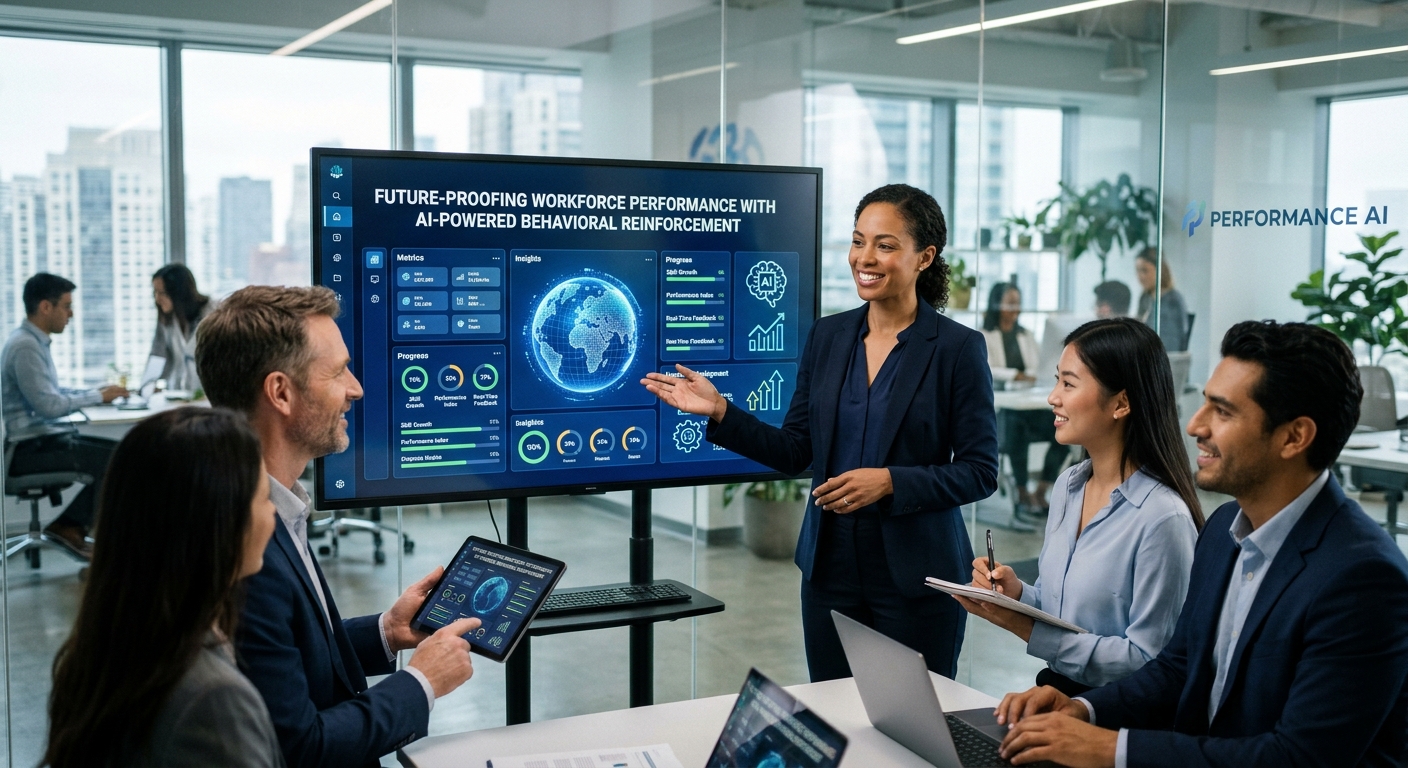
Future-Proofing Workforce Performance with AI-Powered Behavioral Reinforcement
In today’s rapidly evolving business landscape, the adage “the only constant is change” has never rung truer. For Vice Presidents, Directors, and Managers of Learning & Development, the challenge isn’t just delivering training; it’s about ensuring that learning translates into sustained, measurable performance improvement across diverse industries like Compliance, Sales, Banking, Finance, Insurance, Retail, Pharma, Healthcare, Hospitality, Oil and Gas, and Mining. The traditional approaches to corporate learning are struggling to keep pace, leaving organizations searching for innovative solutions. Enter AI-powered behavioral reinforcement – a game-changer poised to revolutionize how we develop and maintain high-performing workforces.
The Evolving Landscape of Workforce Performance
The modern workforce faces unprecedented demands. From navigating complex regulatory frameworks in finance and healthcare to excelling in dynamic sales environments and ensuring safety in high-risk operations like oil and gas or mining, employees need more than just knowledge; they need adaptable skills, resilient behaviors, and a continuous learning mindset. Yet, many organizations find their existing training programs fall short.
Why Traditional Training Falls Short
- Static Content: One-size-fits-all training often fails to engage diverse learners or address specific skill gaps.
- Lack of Retention: Without ongoing reinforcement, much of what’s learned in a workshop or module is quickly forgotten.
- Limited Application: Knowledge doesn’t automatically translate into desired workplace behaviors.
- Difficulty in Measuring Impact: Proving the ROI of traditional training remains a persistent challenge.
Question: How can artificial intelligence revolutionize learning and development to meet the unique needs of diverse workforces across various industries?
Answer: Artificial intelligence offers a transformative approach by moving beyond generic content delivery. It enables deeply personalized learning paths, real-time feedback, and targeted reinforcement that adapts to individual employee performance and specific organizational objectives. This personalized and dynamic engagement ensures that learning is not only retained but actively applied to foster desired behaviors, ultimately enhancing overall workforce performance.
What is AI-Powered Behavioral Reinforcement?
AI-powered behavioral reinforcement is a sophisticated approach that leverages artificial intelligence to identify, track, and strategically influence employee behaviors, aligning them with organizational goals. It goes beyond mere content delivery, actively nudging learners towards desired actions and reinforcing positive habits through personalized interactions, feedback loops, and targeted learning interventions. This system acts as a continuous coach, guiding employees to master critical skills and behaviors over time.
Beyond Knowledge Transfer: Nudging Towards Excellence
At its heart, this methodology acknowledges that simply providing information isn’t enough to drive lasting change. It focuses on the crucial step of translating knowledge into consistent, effective behaviors. For instance, in sales, it’s not just knowing product features; it’s about consistently applying objection-handling techniques. In compliance, it’s not just understanding regulations; it’s about consistently following procedures. AI makes this possible by:
- Analyzing performance data to identify behavioral gaps.
- Delivering timely, contextual feedback and micro-learning modules.
- Utilizing Gamified LMS elements to boost engagement and motivation.
- Predicting potential behavioral risks and intervening proactively.
Question: How can AI effectively identify and reinforce desired behaviors in highly specialized roles, such as pharmaceutical sales or financial compliance?
Answer: AI analyzes vast datasets, including performance metrics, interaction patterns, and compliance records, to pinpoint specific behavioral strengths and weaknesses. For example, in pharmaceutical sales training, AI can identify if a representative consistently uses the latest product messaging. In financial compliance, it can detect patterns indicating potential non-compliance, enabling targeted Risk-focused Training. The AI then delivers personalized nudges, coaching, and micro-learning interventions to reinforce positive behaviors and correct deviations, ensuring continuous improvement and adherence to standards.
The Core Components of an AI-Driven Reinforcement Strategy
Implementing an effective AI-powered behavioral reinforcement strategy relies on several interconnected components:
- Personalized Learning Paths: AI analyzes individual performance, learning styles, and career goals to curate bespoke learning journeys. This ensures that every employee receives the most relevant training at the optimal time, enhancing the impact of Adaptive Learning.
- Real-time Feedback and Coaching: AI provides immediate, constructive feedback on performance, whether it’s through simulated scenarios, live performance analysis, or post-task evaluations. This rapid feedback loop allows employees to correct course quickly and learn from their experiences.
- Gamification and Engagement: By integrating game-like elements such as points, badges, leaderboards, and challenges, AI-powered systems can significantly boost learner motivation and sustained engagement. This makes learning less of a chore and more of an interactive, rewarding experience.
- Data-Driven Insights and Predictive Analytics: AI continuously collects and analyzes data on learning consumption, performance outcomes, and behavioral patterns. This allows L&D leaders to gain deep insights into program effectiveness, identify emerging skill gaps, and even predict future performance trends.
Industry-Specific Applications and Benefits
The versatility of AI-powered behavioral reinforcement makes it applicable across a wide spectrum of industries:
- Compliance and Risk Management: In sectors like Banking and Insurance, where regulatory adherence is paramount, AI ensures consistent understanding and application of complex rules. For instance, it can provide targeted american bankers association training, reinforce personal training insurance compliance, or guide employees through intricate online medical billing and coding training, ensuring every step is compliant. This is critical for healthcare academy training to uphold standards.
- Sales Enablement: For sales teams in Pharma, Retail, and Investment Banking, AI can refine selling techniques. It can personalize pharmaceutical sales training, provide dynamic coaching for an investment banking prep course, or improve customer service skills for training for retail employees, ultimately boosting revenue. Retail staff training can be particularly enhanced through targeted behavioral nudges.
- Operational Excellence: In industries like Oil and Gas, Mining, and Manufacturing, where safety and efficiency are critical, AI can reinforce best practices and safety protocols. This includes highly specialized training for oil and gas procedures or comprehensive training for mining operations, reducing incidents and improving productivity. For general training for retail, it can optimize operational flow.
Question: What specific advantages can AI-driven training provide to global enterprises operating in highly regulated industries with geographically dispersed workforces?
Answer: AI-driven training delivers unparalleled consistency and scalability for global enterprises. It ensures that all employees, regardless of their location, receive uniform, high-quality training that adapts to local regulatory nuances. This significantly enhances compliance, standardizes best practices across regions, and allows for rapid deployment of critical updates. Furthermore, AI’s data analytics capabilities provide centralized visibility into global training effectiveness and workforce performance, enabling proactive adjustments and ensuring a consistently high level of operational excellence and compliance across diverse markets and regulatory landscapes.
Implementing Your AI-Powered Reinforcement Strategy with the Right Learning Platform
To effectively leverage AI for behavioral reinforcement, a robust and intelligent learning platform is essential. A modern Microlearning LMS serves as the backbone, providing the infrastructure for content delivery, learner tracking, and AI integration. When selecting your learning management system, consider platforms that offer:
- AI Powered Authoring Tool: Enables rapid creation of personalized, interactive content.
- Scalability: Capable of managing an enterprise learning management solution.
- Robust Analytics: Provides deep insights into learner behavior and performance.
- Integration Capabilities: Seamlessly connects with existing HRIS and performance management systems.
- User-Friendly Interface: Both for administrators (via an LCMS or Learning content management system) and end-users.
- Cloud-Based Flexibility: A cloud based learning management system ensures accessibility and ease of deployment.
Investing in a comprehensive LMS, or specifically, advanced learning management software and learning management solutions like MaxLearn LMS, means equipping your L&D function with the tools necessary to move beyond traditional training and into an era of proactive, performance-driven learning. Such a system becomes the central hub for all your lms learning management system needs.
Conclusion
The future of workforce performance isn’t just about what employees know; it’s about what they consistently do. AI-powered behavioral reinforcement offers L&D leaders a powerful, intelligent way to cultivate high-performing teams, drive compliance, boost sales, and ensure operational excellence across every industry. By embracing this innovative approach, you can future-proof your workforce, ensuring they not only adapt to change but actively thrive within it. The time to transform your organization’s learning strategy is now, moving from reactive training to proactive, AI-driven performance growth.
No responses yet