

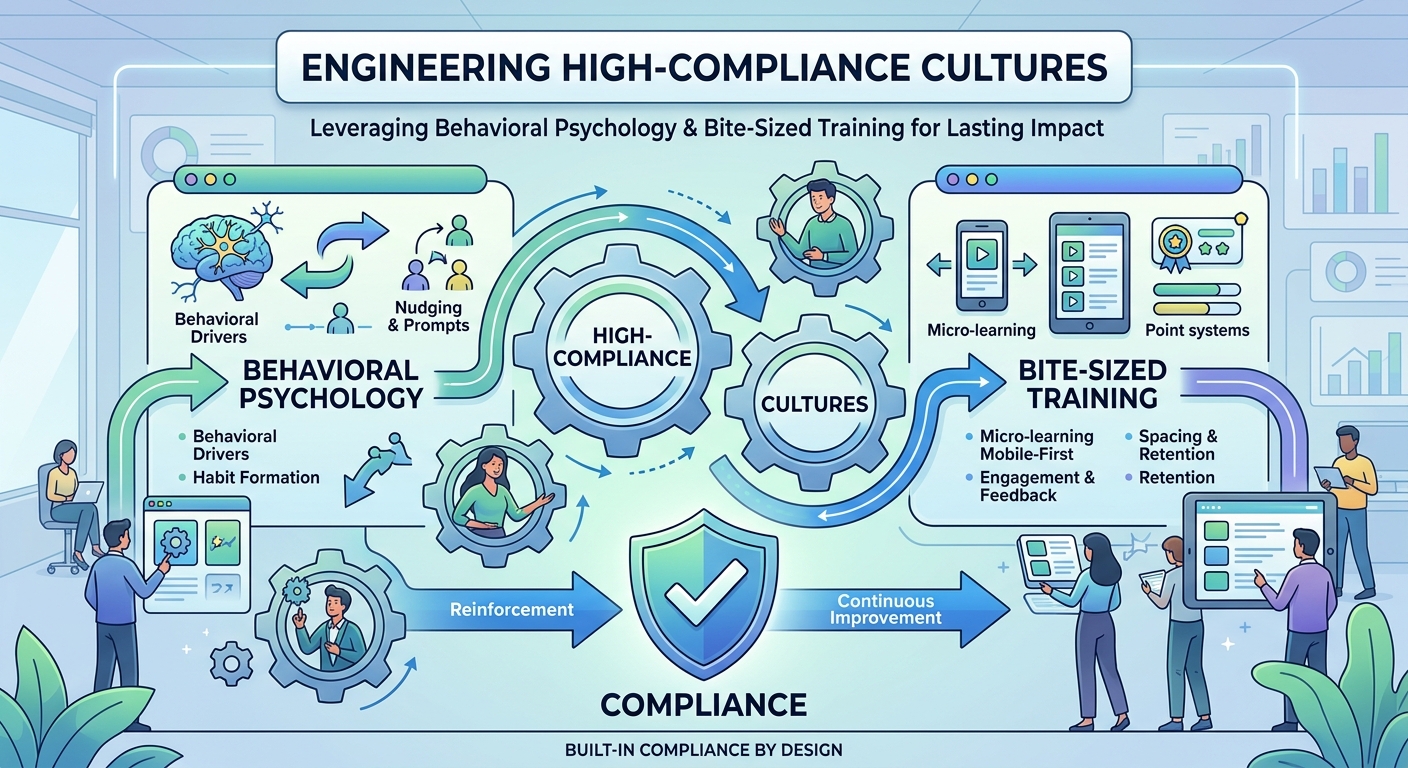
Engineering High-Compliance Cultures Using Behavioral Psychology and Bite-Sized Training
In today’s complex regulatory landscape, fostering a culture of high compliance is not just an aspiration for organizations across industries—it’s a critical imperative. From the highly scrutinized operations in the Adaptive Learning pharmaceutical sector to the intricate financial regulations impacting banking and investment firms, ensuring every employee understands and adheres to guidelines is paramount. Yet, many organizations struggle with traditional compliance training methods that often fall short, leading to disengagement, poor retention, and ultimately, increased risk. This article explores how L&D leaders can leverage behavioral psychology and bite-sized training, powered by cutting-edge learning technologies, to engineer truly high-compliance cultures.
The Pervasive Challenge of Compliance Across Industries
For Vice Presidents, Directors, and Senior Managers in L&D, the specter of non-compliance is a constant concern. Each industry presents its unique compliance hurdles:
- In Pharma, stringent regulations dictate everything from drug development to
pharmaceutical sales training
and ethical marketing.
- The Oil and Gas sector demands rigorous
training for oil and gas
safety protocols and environmental regulations.
- Healthcare organizations navigate HIPAA, patient privacy, and complex billing codes, necessitating effective
online medical billing and coding training
and comprehensive
healthcare academy training
.
- The Banking and Finance industries face a labyrinth of anti-money laundering (AML), Know Your Customer (KYC), and data security rules, making
american bankers association training
and
investment banking prep course
vital.
- Retail, with its vast workforce, requires meticulous
training for retail
,
training for retail employees
, and
retail staff training
on product safety, customer service standards, and data protection.
- Even niche areas like professional services require adherence to standards, such as navigating specific coverages for
personal training insurance
providers.
- The Mining industry, much like Oil and Gas, relies heavily on robust
training for mining
to ensure worker safety and environmental protection.
Traditional, lengthy, annual compliance modules often fail to resonate, leaving employees feeling overwhelmed and underprepared. The challenge is clear: how do we move beyond check-box training to cultivate genuine understanding and consistent compliant behavior?
Why Traditional Compliance Training Falls Short
The shortcomings of conventional compliance training are well-documented:
- Information Overload: Dumping vast amounts of complex information in one go overwhelms learners, leading to cognitive fatigue.
- Lack of Engagement: Monotonous lectures or lengthy e-learning modules fail to capture attention, making critical information forgettable.
- Irrelevance: Generic content often doesn’t connect with an employee’s day-to-day tasks, diminishing its perceived importance.
- Poor Retention: Without regular reinforcement and practical application, knowledge quickly fades, leaving compliance gaps.
Behavioral Psychology: The Blueprint for High-Compliance Cultures
The key to transforming compliance training lies in understanding how humans learn and behave. Behavioral psychology offers powerful insights:
- Habit Formation: Compliance should become an automatic habit, not a conscious effort. This is achieved through consistent, positive reinforcement of desired behaviors.
- Cognitive Load Theory: Our brains have limited processing capacity. Presenting information in small, manageable chunks reduces cognitive load, improving comprehension and retention.
- Reinforcement: Positive reinforcement (e.g., immediate feedback, recognition) strengthens desired actions, making employees more likely to repeat them.
- Spaced Repetition: Re-exposing learners to information at increasing intervals helps embed knowledge into long-term memory.
- Social Learning: Observing and imitating compliant behavior from peers or leaders fosters a collective culture of adherence.
Bite-Sized Training: The Engine of Behavioral Change
This is where bite-sized training, or microlearning, becomes invaluable. By delivering compliance content in short, focused bursts, organizations can align training with the principles of behavioral psychology. A robust Microlearning LMS is essential for delivering this type of content effectively.
Microlearning offers:
- Accessibility: Employees can access training anytime, anywhere, fitting it into their busy schedules.
- Engagement: Short, interactive modules are more engaging than lengthy courses.
- Improved Retention: Small chunks of information are easier to digest and recall.
- Contextual Relevance: Training can be tailored to specific roles or situations, making it immediately applicable.
Key Strategies for Engineering Compliance with Modern Learning Platforms
To truly embed compliance, L&D leaders should integrate several modern learning strategies:
- Gamification for Engagement: Incorporating game-like elements such as points, badges, leaderboards, and challenges can significantly boost motivation and participation. A Gamified LMS transforms mundane compliance training into an interactive and rewarding experience, tapping into our innate desire for achievement and competition.
- Adaptive Learning Paths: Not all employees need the same training.
Adaptive Learning
systems assess an individual’s existing knowledge and learning style, then dynamically adjust the content and pace. This personalized approach ensures training is efficient, relevant, and addresses specific knowledge gaps, especially critical in nuanced areas like investment banking prep course content or complex online medical billing and coding training.
- Contextual Relevance and Scenario-Based Learning: Presenting compliance rules within realistic scenarios relevant to an employee’s daily tasks makes the information immediately actionable. For example, retail staff training can use customer interaction scenarios, or pharmaceutical sales training can simulate ethical dilemma situations.
- Continuous Repetition and Reinforcement: Leverage spaced repetition by delivering short quizzes or refreshers over time. This consistent exposure reinforces learning, preventing the “forgetting curve” from eroding critical knowledge.
- Instant Feedback and Coaching: Provide immediate feedback on responses in interactive modules. This instant gratification reinforces correct understanding and guides learners towards the right behavior, fostering a proactive approach to compliance.
The Pivotal Role of Advanced Learning Platforms
Implementing these strategies requires a sophisticated learning ecosystem. An enterprise learning management system (LMS), or a Learning Content Management System (LCMS), provides the backbone for delivering, tracking, and managing compliance training. A
cloud based learning management system
offers scalability, accessibility, and robust reporting, crucial for organizations operating across multiple geographies or with diverse workforces. Solutions like MaxLearn LMS are designed to facilitate this modern approach, offering a comprehensive learning management software suite that acts as a true learning management solution.
How can intelligent systems enhance compliance training effectiveness?
Intelligent systems, often leveraging AI, significantly elevate compliance training. They enable deep personalization, tailoring learning paths based on an individual’s role, historical performance, and identified risk areas. AI can also analyze learner data to identify common areas of confusion or non-compliance, allowing L&D teams to proactively adjust content. An AI Powered Authoring Tool further streamlines content creation, making it faster and easier to develop highly relevant, scenario-specific microlearning modules.
What are the benefits of a robust learning platform for global compliance?
For organizations with a global footprint, a powerful learning management system is indispensable. It ensures consistent messaging and training quality across all regions, adapts content for local regulations and languages, and provides centralized reporting to track global compliance status. This consistency is vital for industries like banking and finance, and oil and gas, where global standards often meet local nuances.
Can AI-driven training reduce compliance risks in highly regulated sectors?
Absolutely. By identifying knowledge gaps through advanced analytics and delivering targeted, adaptive content, AI-driven training minimizes human error and strengthens organizational defenses against non-compliance. It allows organizations to move from a reactive “fix the problem” approach to a proactive “prevent the problem” stance, creating a resilient, high-compliance culture even in the most regulated environments like healthcare or pharmaceuticals.
Conclusion
Engineering high-compliance cultures is no longer about mandatory, forgettable training sessions. It’s about strategically leveraging behavioral psychology principles and modern learning technologies to embed compliant behaviors into the daily fabric of your organization. By adopting bite-sized training delivered through an advanced LMS, enhanced by features like gamification, adaptive learning, and AI-powered tools, L&D leaders can transform compliance from a burden into a competitive advantage. This approach ensures your workforce is not just aware of the rules, but actively embodies them, safeguarding your organization’s reputation, mitigating risks, and driving sustainable growth.
No responses yet