

“`html
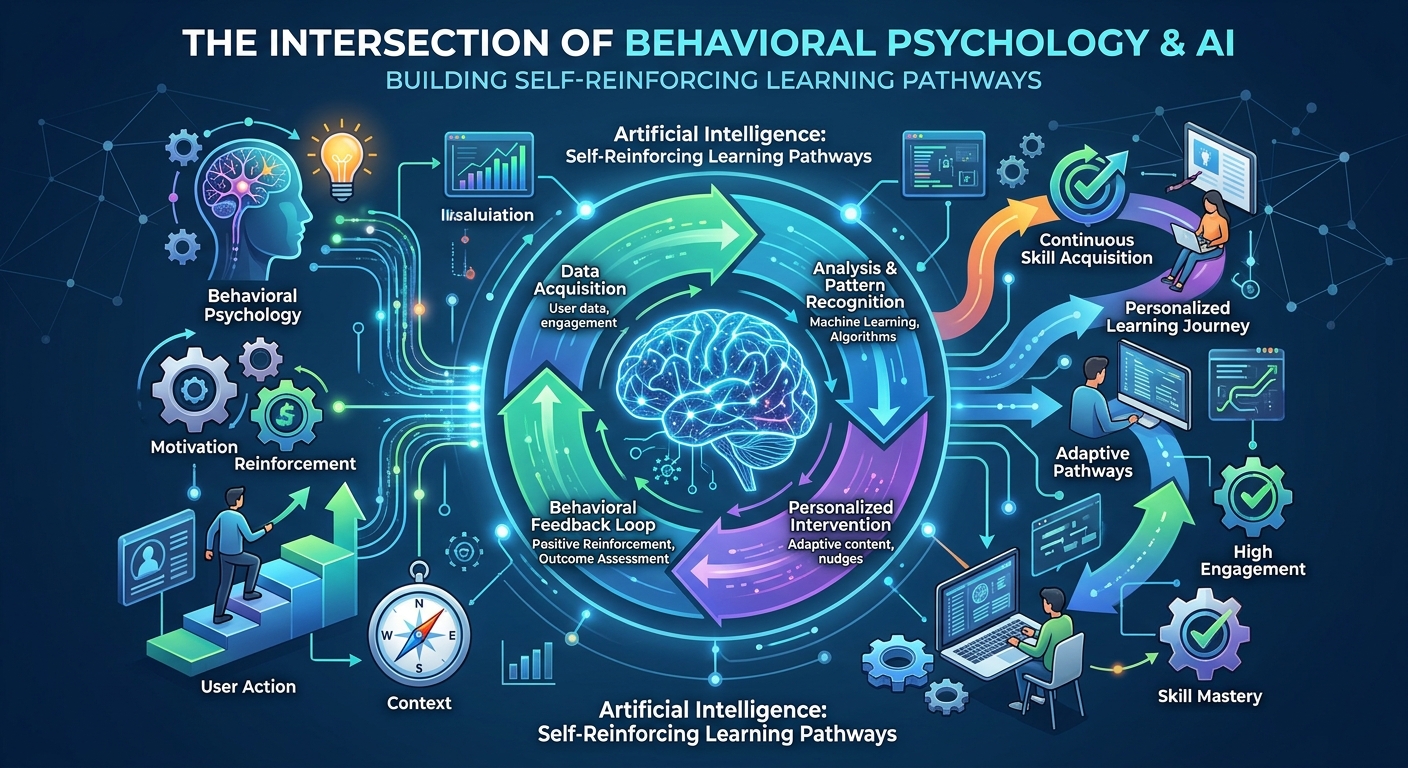
The Intersection of Behavioral Psychology and AI: Building Self-Reinforcing Learning Pathways
In today’s rapidly evolving corporate landscape, organizations across sectors—from pharmaceutical sales training to training for oil and gas, and training for retail employees—face an unprecedented challenge: how to cultivate a workforce that is not only competent but continuously learning and adapting. For L&D Vice Presidents, Directors, and Managers, the goal isn’t just to deliver content; it’s to create profound, lasting behavioral change and measurable performance improvement. This is where the powerful synergy between behavioral psychology and artificial intelligence (AI) comes into play, forging self-reinforcing learning pathways that transform employee development.
The traditional “one-size-fits-all” approach to corporate training is increasingly obsolete. Modern learners, especially in high-stakes environments like healthcare academy training or investment banking prep courses, demand personalized, engaging, and relevant experiences. This article explores how combining the insights of human behavior with the analytical prowess of AI can unlock a new era of effective and efficient enterprise learning management.
The Foundations: Behavioral Psychology in Learning
At its core, learning is about changing behavior. Behavioral psychology provides the frameworks for understanding how individuals acquire knowledge, skills, and attitudes. Key principles include:
- Reinforcement: Learners are more likely to repeat behaviors (like completing a module or applying a new skill) if those behaviors are followed by positive outcomes (feedback, recognition, progress).
- Feedback Loops: Timely and specific feedback is crucial for correcting mistakes and reinforcing correct actions.
- Motivation: Intrinsic and extrinsic factors drive learners. Understanding these drivers allows for the design of environments that encourage engagement.
- Spaced Repetition: Recalling information at increasing intervals helps embed it into long-term memory, combating the forgetting curve.
- Goal Setting: Clear, achievable goals provide direction and a sense of accomplishment.
These principles have long guided instructional design. However, implementing them at scale, tailored to each individual, has historically been a significant challenge for even the most robust learning management solutions.
The Catalyst: How AI Revolutionizes Learning Delivery
What is AI in learning, and how does it transform traditional approaches? Artificial intelligence brings unprecedented capabilities to L&D, primarily through its ability to process vast amounts of data, identify patterns, and make intelligent predictions or recommendations. Here’s how it acts as a catalyst:
- Personalization at Scale: AI can analyze a learner’s past performance, job role, learning style, and career aspirations to deliver hyper-relevant content. How does AI personalize training? It does this by dynamically adjusting the pace, difficulty, and type of content presented, ensuring each learner gets what they need, when they need it.
- Predictive Analytics: By identifying learning patterns and potential knowledge gaps, AI can proactively recommend interventions or additional resources. Is AI capable of understanding learning patterns? Absolutely. Sophisticated algorithms can detect areas where a learner is struggling or excelling, guiding them to optimal next steps.
- Automated Feedback & Assessment: AI can provide instant, constructive feedback on simulations, open-ended responses, and practical exercises, a critical component for effective learning in areas like online medical billing and coding training.
- Content Curation & Creation: AI tools can help L&D teams rapidly curate and even generate learning content, improving efficiency and relevance.
Building Self-Reinforcing Learning Pathways: The Synergy in Action
The true power emerges when behavioral psychology’s understanding of how people learn meets AI’s capability to optimize and deliver learning experiences. This intersection creates self-reinforcing pathways where every interaction fuels the next, making learning continuous and deeply embedded.
Adaptive Learning and Personalized Journeys
How does AI create adaptive learning? AI-powered systems, often operating within a sophisticated Microlearning LMS, continuously assess a learner’s progress and adjust the learning path in real-time. If a learner masters a concept quickly, AI fast-tracks them to the next level. If they struggle, it provides additional resources, different formats (like videos instead of text), or practice scenarios. This immediate adaptation reinforces successful learning by challenging the learner appropriately, preventing boredom or frustration. This is particularly vital for intricate subjects such as american bankers association training or compliance in industries requiring Risk-focused Training.
Gamification and Intrinsic Motivation
Can AI improve employee engagement? Absolutely. By applying behavioral principles of reward and challenge, AI can power dynamic Gamified LMS experiences. It identifies what motivates individual learners—be it points, badges, leaderboards, or personalized challenges—and strategically deploys these elements. This intrinsic motivation creates a positive feedback loop: learners engage more, achieve more, and are further incentivized to continue learning, making it highly effective for retail staff training or training for mining where engagement can be challenging.
Intelligent Feedback and Spaced Repetition
AI’s ability to analyze performance data allows for highly granular and personalized feedback. Instead of generic responses, learners receive insights into the specific areas where they need improvement, coupled with targeted resources. Furthermore, AI algorithms can schedule spaced repetition exercises precisely when a learner is most likely to forget, reinforcing memory and ensuring long-term retention. This is invaluable for critical knowledge domains like those requiring personal training insurance certification or detailed financial regulations.
Content Creation and Optimization with AI Powered Authoring Tools
What are the benefits of AI in L&D beyond delivery? AI extends to the very creation of learning content. An AI Powered Authoring Tool can analyze existing materials, suggest improvements for clarity or engagement, and even generate new content modules based on identified learning gaps or industry trends. This speeds up content development for large organizations utilizing a learning content management system (LCMS) or a cloud based learning management system, ensuring training remains current and impactful.
The Future of Corporate Learning: An Integrated Approach
What is the future of AI in corporate training? It’s a future where a seamless learning management software integrates behavioral science with cutting-edge AI. This creates a powerful ecosystem where:
- Each learner’s journey is unique and optimized for their individual success.
- Engagement remains consistently high due to personalized challenges and reinforcement.
- Knowledge retention is significantly improved through intelligent repetition and feedback.
- L&D teams gain unparalleled insights into the effectiveness of their programs and can make data-driven decisions.
For L&D leaders looking to equip their workforce for tomorrow’s challenges, embracing this intersection isn’t just an option; it’s a strategic imperative. The goal is to move beyond simply tracking completions to truly understanding and shaping desired behaviors, driving tangible business outcomes. A robust, enterprise learning management system capable of leveraging these dual disciplines, like MaxLearn LMS, provides the infrastructure for this transformative approach.
By consciously building self-reinforcing learning pathways powered by behavioral psychology and AI, organizations can ensure their employees are not just passively consuming information, but actively, enthusiastically, and effectively learning, growing, and contributing to success across every industry, from finance to pharmaceuticals, and healthcare to hospitality.
“`
No responses yet