

“`html
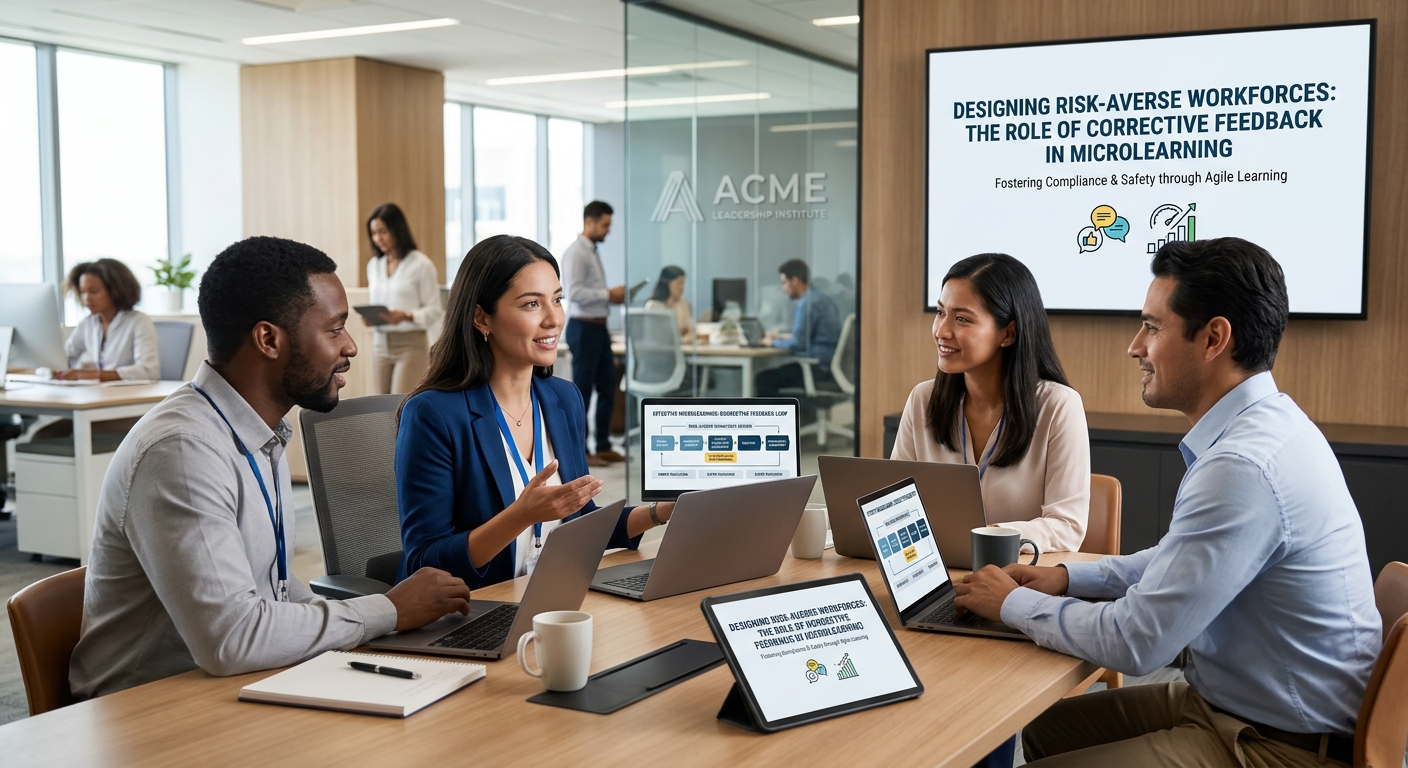
Designing Risk-Averse Workforces: The Role of Corrective Feedback in Microlearning
In today’s dynamic business landscape, organizations across every sector face an escalating array of risks – from regulatory non-compliance and operational failures to cybersecurity threats and market volatility. For Vice Presidents, Directors, and Senior Managers in Learning & Development (L&D), the imperative to build a truly risk-averse workforce is paramount. It’s not just about avoiding penalties; it’s about safeguarding reputation, ensuring operational continuity, and fostering sustainable growth. This article delves into how microlearning, specifically when enhanced by targeted, corrective feedback, can be the cornerstone of such a resilient and informed workforce.
The Imperative of Risk-Averse Workforces
Creating a culture where employees are not only aware of risks but are also equipped to proactively mitigate them is no longer a luxury, but a necessity. Industries like banking and finance, healthcare, pharmaceutical, and oil and gas, operate under stringent regulations where even minor missteps can have catastrophic consequences. From ensuring compliance through Risk-focused Training to maintaining safety protocols in hazardous environments, the stakes are incredibly high.
Understanding Risk in Diverse Sectors
- Banking and Finance: For professionals undergoing american bankers association training or a specialized investment banking prep course, understanding complex regulatory frameworks is critical. Effective training requires immediate clarity on incorrect assumptions to mitigate financial and compliance risks.
- Healthcare: In health care and pharmaceutical sectors, training must ensure patient safety and regulatory adherence. This includes everything from online medical billing and coding training to comprehensive healthcare academy training and pharmaceutical sales training. Mistakes here can have life-altering repercussions and severe compliance penalties.
- Oil and Gas & Mining: Safety is paramount. Training for oil and gas and training for mining must instill deep procedural knowledge to prevent accidents, environmental damage, and operational disruptions.
- Retail and Hospitality: While risks may seem different, issues like fraud prevention, data security, and compliance with consumer protection laws are vital. Robust training for retail, including retail staff training and training for retail employees, can significantly reduce exposure. Even niche areas like personal training insurance require specialized knowledge to avoid liability.
Microlearning: A Foundation for Agility and Retention
Traditional, lengthy training sessions often fail to deliver the sustained engagement and knowledge retention required for effective risk mitigation. This is where microlearning shines. By breaking down complex topics into bite-sized, easily digestible modules – typically 3-7 minutes in length – microlearning aligns with how adults learn best in a fast-paced environment. It allows for on-demand access to crucial information, enabling employees to refresh their knowledge precisely when needed. Implementing a robust Microlearning LMS is essential for delivering this content effectively across diverse workforces.
The Power of Corrective Feedback
While microlearning provides accessibility, it’s the integration of intelligent corrective feedback that truly transforms it into a powerful tool for building risk-averse workforces. Corrective feedback isn’t just about telling a learner they’re wrong; it’s about explaining why they’re wrong and how to achieve the correct understanding or action. This immediate, targeted guidance helps cement correct behaviors and knowledge, crucial for high-stakes environments where precision is non-negotiable.
Immediate vs. Delayed Feedback
The timing of feedback is critical. In a microlearning context, immediate feedback after an assessment or scenario-based question is far more effective than delayed feedback. It allows the learner to instantly course-correct their understanding, preventing the formation of incorrect mental models. This is particularly vital in compliance training or safety procedures where errors cannot be tolerated, making knowledge stick when it matters most.
Personalized Feedback
Generic feedback often falls flat. Effective corrective feedback should be personalized, addressing the specific misconception or error made by the learner. This requires sophisticated assessment design within a modern learning management system that can analyze responses and provide tailored explanations, references, or alternative learning paths. This adaptive approach ensures that each learner receives the precise support they need to master the material, fostering a deeper understanding.
Integrating Corrective Feedback with Microlearning for Risk Mitigation
Combining the agility of microlearning with the precision of corrective feedback creates a potent strategy for L&D leaders across industries:
- Reinforcing Compliance: In banking, finance, and healthcare, micro-modules on new regulations or policy updates can be paired with quizzes offering immediate, detailed feedback. This ensures rapid understanding and adherence, minimizing compliance breaches.
- Enhancing Safety Protocols: For training for oil and gas or training for mining, scenario-based micro-simulations with corrective feedback allow employees to practice safety procedures virtually, identifying and correcting errors before they occur in the field, thereby preventing accidents.
- Improving Sales Acumen: In pharmaceutical sales training, microlearning modules on product knowledge or sales ethics can provide feedback on how to handle difficult objections or tricky ethical dilemmas, honing skills crucial for compliant and effective sales practices.
- Optimizing Customer Service: For training for retail employees and hospitality staff, micro-lessons on handling sensitive customer data or de-escalation techniques can leverage feedback to refine communication and procedural adherence, reducing customer complaints and data breaches.
Leveraging Technology: The Role of Modern Learning Solutions
To implement this effectively, organizations need a robust technology infrastructure. A comprehensive learning management system (LMS) or a specialized lms learning management system, especially a cloud based learning management system designed for enterprise learning management, is critical. Solutions like MaxLearn LMS provide the necessary tools for content delivery, assessment, and sophisticated feedback mechanisms. A strong Learning content management system (LCMS) is also essential for authoring and managing the granular, feedback-rich content.
AI-Enhanced Feedback Mechanisms
The advent of artificial intelligence (AI) is revolutionizing how corrective feedback can be delivered. AI-powered tools can analyze learner responses with unprecedented precision, offering highly personalized and context-aware feedback. This goes beyond pre-programmed responses, delving into the nuances of a learner’s understanding to guide them more effectively, a true embodiment of Adaptive Learning.
AI Questions and Answers
Here are some common inquiries regarding the application of intelligent systems in learning and development:
Q: How can advanced computational systems personalize feedback for complex compliance scenarios?
A: Advanced computational systems can analyze a learner’s response against a vast database of compliance regulations and best practices. By identifying specific deviations or misunderstandings, they can generate tailored feedback that explains the exact regulatory clause violated, provides relevant case studies, or suggests alternative, compliant actions. This level of precision is crucial for areas like financial compliance or medical ethics, ensuring every learner grasps the intricate details.
Q: What role do intelligent algorithms play in identifying emerging risk patterns from learner interactions?
A: Intelligent algorithms continuously monitor and analyze aggregate learner data within the learning management software. If multiple employees consistently make the same error in a specific microlearning module related to, say, data security, the system can flag this as an emerging knowledge gap or a potential procedural weakness across the workforce. This allows L&D to proactively address systemic risks before they manifest as real-world incidents, offering a powerful predictive capability.
Q: Can predictive analytics anticipate potential knowledge gaps in teams before they lead to incidents?
A: Yes, predictive analytics, a facet of intelligent systems, can utilize historical performance data, engagement metrics, and even external factors (like new regulations or operational changes) to forecast areas where teams might develop critical knowledge gaps. For instance, if a new product launch is imminent, predictive models can highlight potential training deficiencies in the sales team, allowing L&D to deploy targeted microlearning with corrective feedback before the launch, preventing sales errors or compliance issues.
Q: What are the benefits of an AI Powered Authoring Tool in creating corrective feedback?
A: An AI Powered Authoring Tool significantly streamlines the creation of sophisticated corrective feedback. It can suggest common misconceptions for a given topic, automatically generate multiple variations of feedback messages, and even propose follow-up questions or resources based on anticipated learner errors. This not only speeds up content development but also enhances the quality and relevance of the feedback provided, especially for complex subjects found in pharmaceutical sales training or financial compliance, ensuring a richer learning experience.
Conclusion
Designing risk-averse workforces is a strategic imperative for L&D leaders across all industries. By harnessing the power of microlearning combined with intelligent, corrective feedback, organizations can build a resilient, informed, and compliant workforce ready to navigate today’s complex risk landscape. Embracing modern learning management solutions and leveraging the capabilities of AI will be key to unlocking the full potential of this approach, ensuring that employees are not just trained, but truly empowered to mitigate risk and drive success.
“`
No responses yet